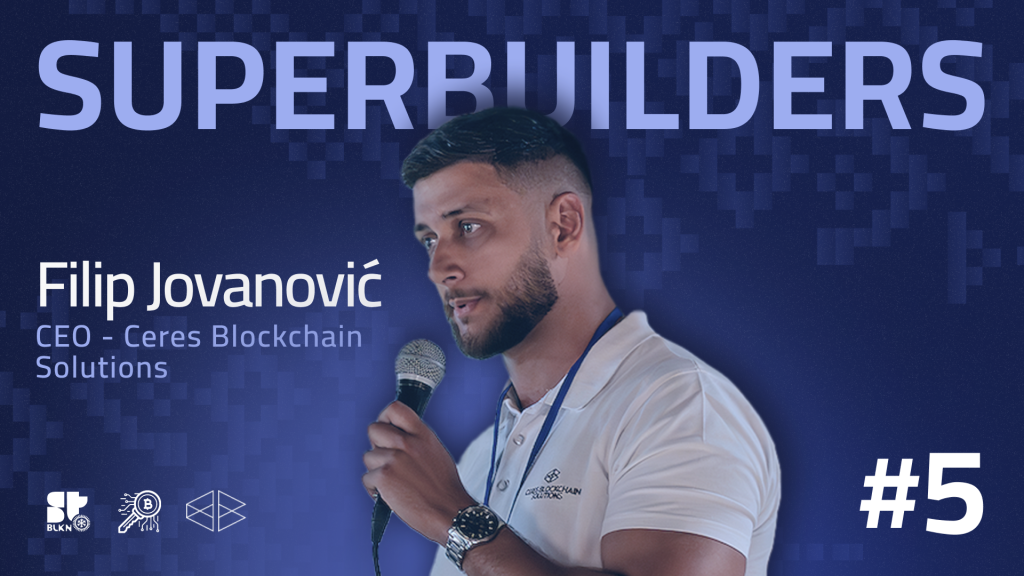
From pioneering DeFi solutions to bringing blockchain transparency to the maritime industry, Ceres Blockchain Solutions has established itself as a key player in the Web3 space. Based in Belgrade and Novi Sad, the company balances in-house product development with consulting and outsourcing services, leveraging its firsthand experience to help other projects succeed.
In this interview, Filip from Ceres Blockchain Solutions shares insights into their journey, the challenges of building in Web3, their recent success with Pont Network, and what’s next for the team.
- Can you introduce Ceres Blockchain Solutions and its core mission? What makes your approach to Web3 development unique?
Sure! Ceres Blockchain Solutions is a software company, based in Belgrade and Novi Sad, focused on design, development and implementation of software solutions based on Web3. In addition to developing in-house products, we empower innovative minds in the Web3 space to deliver sustainable software solutions that bring their ideas to reality, through our comprehensive consulting and outsourcing services.
Our approach to clients is unique because we’ve been in their shoes – building our own products and facing the same challenges. In fact, we’re still doing it with our in-house products. We understand their obstacles, not just in coding but throughout the entire process, often before they even realize them.
- Pont Network last year received an Instagrant. Can you tell us more about this project and how you plan to integrate blockchain technology into the maritime industry?
Huge thanks to Superteam Balkan and the Solana Foundation for recognizing the potential of this project and backing us with an Instagrant. We truly appreciate the support, much love for them!
In short, Pont Network’s mission is to redefine transparency in the maritime industry. By leveraging blockchain’s core strengths – immutability, decentralization, and transparency – the platform ensures secure, tamper-proof records of a ship’s history, making all transaction records and shipment data unalterable once recorded.
To validate and refine its solutions, we are partnering with some of Europe’s leading maritime universities. These collaborations will involve testing the platform on university ship engines, providing practical insights and demonstrating its real-world effectiveness.
In parallel, we are actively working to secure its first client, who will implement and utilize the product in live maritime operations.
- Ceres has developed multiple in-house Web3 platforms, including Liquidity Locker, Launchpad, Demeter Farming, and DEO Arena. Which of these has gained the most traction, and what have been the biggest challenges in developing them?
I would say that Demeter Farming gained the most traction, especially considering it reached 15-20 million TVL during the heart of the bear market on a pretty small chain – I personally find it impressive. And the platform itself is very unique.
As for the biggest challenges, everything was difficult since it was our first time building something like this. Four years ago, we didn’t have the experience we have today, but in a way, it was easier to succeed back then. The timing was right, and the passion and hard work was unmatched, which played a crucial role in making it work.
- Ceres recently won the Solana Tracks Bonus Bounty at Taipei Week 2024, congratulations! Can you tell us more about the project that earned this recognition and what it means for your team?
Thank you for the congratulations! Winning this bounty is a testament to the hard work we’ve put in, and it’s also a huge vote of confidence from the Solana community and ecosystem.
You can see what else we’ve won with Pont Network:
- How do you balance in-house product development with consulting and outsourcing services for external Web3 projects?
It can be challenging because internal projects are really time-consuming, but so far, we’re managing well. The approach is to take on outsourced work to finance or kickstart our in-house projects. We kinda have two teams, one for outsourcing and the other for internal projects. While both are interesting, I’m definitely more excited about the in-house work. - Belgrade has become a hub for blockchain innovation in the region. How do you see the local Web3 ecosystem evolving, and what role does Ceres play in it?
Belgrade’s Web3 ecosystem is growing rapidly, with more startups, developers, and investors joining the scene. The city’s role as a regional tech hub, along with strong educational initiatives and events, lays a solid foundation for Web3 adoption.
CBS and I are contributing by creating educational courses and offering internships for students, along with programs like Excellent3, which aims to nurture blockchain technology and a sustainable Web3 ecosystem in Serbia until 2027. We also support local events and conferences, whether through sponsorships or simply by purchasing tickets.
Organizations like Superteam Balkan and EthBelgrade are playing a crucial role in promoting the Serbian Web3 ecosystem, and they truly deserve recognition.
We are also in final preparations to launch the Solana Course that will be exclusively for balkan region supported by Superteam Balkan and Solana Foundation.
Until then feel free to check our Masterclass Rust language Course on english language on the link below.
https://www.udemy.com/course/web3-academy-masterclass-rust/ - Regulatory challenges are a major concern for blockchain companies. How does Ceres navigate the evolving legal landscape in the EU and the broader global market?
Since CBS is based in Serbia, the legal landscape differs a bit from the EU, but we are working hard to stay up to date with the latest changes. It was a challenge at the beginning of our journey since the laws were unclear and undefined, but the regulatory environment is improving over time. A big shout-out to people like Ilija Rilakovic, Lana, and others for their hard work in helping to create a smoother path for companies to operate under evolving regulations. - What are some of the biggest trends in Web3 development that you believe will shape the industry in 2025?
I’m all for DePIN and anything that tackles real-world challenges and creates real value. While I think we’ve had enough of meme coins, I do still enjoy trading them occasionally. - Which collaboration would you highlight as your most significant or the one you are most proud of?
The most recent collaboration with Superteam Balkan and Solana Foundation is particularly significant for CBS, not only because of the values we’re gaining but also because of the collective impact both parties are making in advancing the Web3 ecosystem in the Balkan region. Additionally, we’re excited about the upcoming collaboration with maritime universities, in relation to the Pont Network. - What’s next for Ceres and Pont Network? Are there any upcoming milestones or partnerships we should keep an eye on?
For Pont Network, after testing the platform on university ship engines and gaining practical insights that demonstrate its real-world effectiveness, the team will be ready to pursue fundraising and secure its first client.
For CBS, in addition to Pont, the focus is on launching an exciting Web3 game on Solana, continuing collaborations with high-profile clients, and expanding and strengthening the team. With ETHDenver approaching in just a few days, the company is also preparing for key networking opportunities and valuable discussions at the event.