

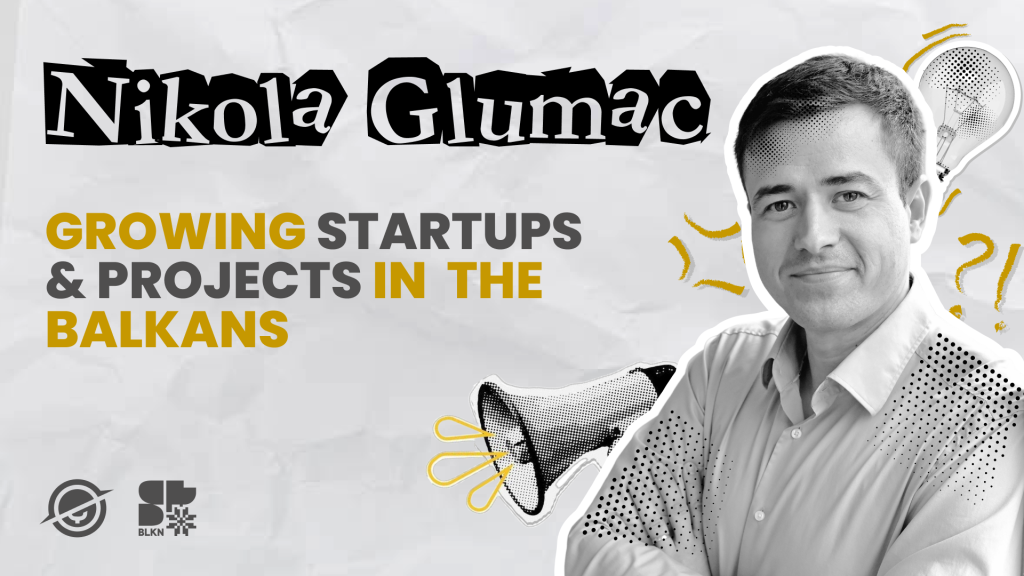
Last year, the Croatian Chamber of Commerce called my name for their Golden Marten award. As I walked up to accept recognition for the “most successful small company in Zagreb,” I had one thought: I never planned any of this.
I’m Nikola Glumac, founder and CEO of Thespian, a software development company that’s grown from my solo programming work to a team of 20+ people serving clients across continents. We specialize in four industries—EdTech, Healthcare, Transportation, and Blockchain—and build technology that measurably improves people’s lives.
When I started Thespian ten years ago, I didn’t have a business plan, a growth strategy, or dreams of entrepreneurial glory. I just wanted to escape the soul-crushing environment of traditional software companies and create something different. A place where people could be happy and do their best work because they wanted to, not because some manager was breathing down their necks.
Everything else—the 362% revenue growth in the past four years, the 20+ employees, the international clients, the second office in Oslo, the awards—was a side effect of this mindset. Or maybe it all happened because I focused on the wrong things according to every business book ever written.
If you’re thinking about going solo, or you’re already deep in the founder trenches wondering what the hell you’ve gotten yourself into, here’s what I learned. Some of it might save you from my worst mistakes.
1. Most of your “success” will be accidental
Let’s start with something that messed with my head, and will probably mess with yours: the moment you start chasing business metrics directly, you’ll probably fail to achieve them. I never sat down and said “I want to grow revenue 20x in ten years” or “I want to win industry awards.” Those things happened because I obsessed over completely different stuff. I asked myself if our people were growing, if clients trusted us with their hardest problems, and if we were building something that actually mattered.
The financials, the recognition, and the growth numbers are just the scoreboard. They tell you how the game went, but they’re not the game itself.
Many founders get this backwards. They optimize for metrics that make them look successful instead of doing the work that makes them actually successful. It’s like trying to lose weight by only stepping on the scale.
What this means for you: Stop checking your revenue dashboard every morning, and start asking better questions. Are your best people still excited about Monday mornings? Are clients calling you with bigger, more complex problems? Are you solving things that matter? If the answer is yes, the numbers will follow.
2. You will have to become someone you’re not
This was the most brutal part for me, and nobody prepared me for it.
I started Thespian because I wanted to be the best programmer I could be. I loved the safety of technical problems. There’s always a right answer, and if you’re smart enough, you can find it. I could disappear into code for hours and emerge with something that worked perfectly. But at some point, I hit a wall. Being technically excellent wasn’t enough anymore. My company needed someone who could handle business development, manage people, make strategic decisions, and deal with clients. It needed a leader, not just a really good developer.
In a way, I had to “kill the programmer” in myself. Not literally—I still code sometimes—but I had to let go of my identity as a technical expert and become something I’d never been: a business person.
It was terrifying. Like a baby learning to walk, you’re abandoning the safety of crawling for something uncertain and wobbly. You feel incompetent at first. You miss the simplicity of your old role. But that discomfort means you’re growing.
What this means for you: Whatever got you to start your company—your technical skills, your industry expertise, your specific talent—won’t be enough to scale it. You’ll have to learn completely new skills and, harder still, develop a completely new identity. The internal transformation is often harder than the business challenges themselves.
3. Letting people go will break your heart (and that’s a good thing)
When one of my earliest employees quit a few years into building Thespian, it hit me hard. This was someone I’d mentored, connected with, and trusted with important work. My first instinct was to protect myself from ever feeling that vulnerable again.
I wanted to become the kind of boss who keeps everything important close to the chest, doesn’t give chances or share knowledge freely, and protects himself from the pain of people leaving. That would have been the worst decision I could have made.
Today, that former employee is one of my closest friends. He’s even the godfather to my youngest child. Our friendship survived his departure and became stronger because it wasn’t related to work anymore. He took what he learned at Thespian and created something positive somewhere else.
The truth is, in this industry, the only real value in a company is the people. You have to overcome your fear of losing people. That fear can’t be bigger than the joy of sharing knowledge with them.
What this means for you: Don’t let your fear of losing people prevent you from investing in them fully. Share your knowledge. Give them real responsibility. Trust them with important work. When they eventually leave (and some will), they’ll take something valuable into the world. And the relationships that matter will outlast the business arrangements.
4. Sometimes the rational choice is stupid
In our early days, we had a client who refused to pay us for three months. We were broke. To make matters worse, an employee and I had each taken out loans to buy apartments just a month before this all hit. Every rational person in my life was saying the same thing: give up.
Instead, I made what looked like an insane decision. We were in the middle of negotiating a collaboration with IOHK, the company behind the Cardano blockchain, and I told them we’d work for free for a month to prove how good we were. We went all-in when we had nothing left to bet.
They accepted us. It became a turning point for the company. That moment of apparent insanity, betting everything when everyone said to fold, opened doors we never would have found playing it safe.
What this means for you: There will be moments when the rational choice is to quit, and everyone who cares about you will encourage it. But if you have real conviction about what you’re building, the “crazy” choice may be the only one that makes sense. Sometimes you have to be a little crazy.
5. Excellence is achievable, but balance is the real challenge
It’s not hard to be excellent at one thing. Take the 100-hour rule: if you invest 100 hours of deliberate practice in a topic or skill, you’ll be better at it than 95% of the population.
The real challenge in entrepreneurship isn’t becoming good at business. It’s achieving success without destroying everything else in your life. It’s sustaining the balancing act between business success and your family, relationships, and health.
As time goes by, it gets easier and easier to sacrifice the intangible things, like your health and relationships. Once you realize that if you put in X time, you’ll get Y money, you become prone to taking everything that doesn’t fit into this formula for granted—and dangerously willing to sacrifice it. But that’s usually driven by fear of failure, fear of not being able to support the people who depend on you.
What this means for you: Self-control is crucial. You need to know when to say “enough” to yourself. Know that any sacrifice in one area dramatically impacts your entire life and future. Be careful not to sacrifice the wrong things for temporary gains.
6. The isolation will surprise you
Nobody prepared me for the loneliness.
Being a founder, especially solo, will separate you from people. It will put you in what I think of as a “tower of solitude.” You’ll make decisions that affect other people’s livelihoods. You’ll see problems and opportunities that others won’t. Your lifestyle will become something that’s not for everyone.
Some friends might stop inviting you to events because you’re always working. Family members will question your priorities. All your relationships will be tested by the intensity of this path. It’s something you can’t just turn off or separate from after working hours. And it won’t make your loved ones stop caring about you, but it will be difficult for them to adjust. The isolation tests every relationship in your life. Some won’t survive, and that’s not necessarily anyone’s fault. Few people understand what you’re going through unless they’ve been there themselves.
What this means for you: Find other founders. Read their stories. Connect with people who understand what you’re experiencing. There are ways to be a bit less alone on this path. But know that it will test your limits and the limits of people close to you. A lot gets sacrificed for this kind of journey.
7. You have to trust people (even when it’s terrifying)
You only have 24 hours in a day. If you want to build something bigger than yourself, you have to trust other people with important things. This is obvious in theory and terrifying in practice.
Every delegation feels like a risk. But if you choose the right people and trust them, they’ll help you achieve things you never could have done alone.
Choose people for character and potential, not just current skills or experience. Then give them more responsibility than feels comfortable. The ones who rise to the challenge will become the foundation of everything you build.
What this means for you: Hiring is the most important thing you’ll do as a founder. Take it seriously. Look for people who share your values, not just people who can do the job. Then trust them enough to surprise you. It’s a lot like football: individual skill matters, but team play wins the game.
What I’d do differently, if I could do it again, would I start a company with a co-founder or two? Or would I skip this whole path and get a full-time job instead? Probably not. Solo founding taught me things about myself and about business that I never would have learned otherwise.
But I would have prepared better for the emotional journey. I had no idea that building a company would change me as much as it did. The truth is, while Thespian grew relatively linearly, I went through internal upheavals. I experienced personal catharses that had nothing to do with revenue or headcount.
If you’re just starting out, know that this path will reshape you in ways you can’t predict. The person who starts the company probably won’t be the same person running it five years later.
Conclusion
Ten years later, Thespian has become something I never planned but always wanted: a place where people choose to stay, where we solve problems that matter, where work feels meaningful instead of just profitable.
That original vision—creating an environment where people are happy and do their best work because they want to—actually happened. Not because I followed some business framework, but because I stayed focused on the things that don’t show up on income statements.
The awards, the growth, and the financial success were just side effects of doing right by people and building something worth building.
If you’re thinking about going solo, understand that it will be harder than you imagine and different than you expect. Know that you’re making much more than a career choice—you’re choosing a lifestyle that will test everything about you and your world.
However, if you can stay focused on creating real value for real people, if you can find something that pulls you forward even when the universe is screaming to stop, the metrics will take care of themselves.
Just don’t expect to plan any of it.
