

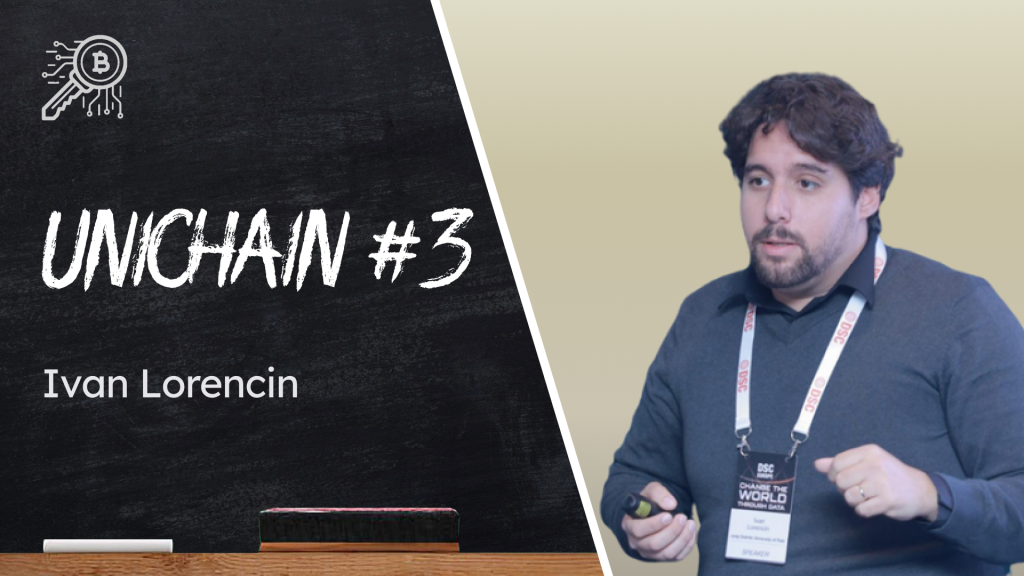
Ivan Lorencin is an Assistant Professor and Vice Dean at the Juraj Dobrila University of Pula, where his academic and research work bridges artificial intelligence, Python development, and real-world applications of machine learning. As a co-founder and developer at dAIgnostics, and the founder and CEO of Ant Intelligence, he actively contributes to the intersection of AI, healthcare, and innovation. Known for his creative approach to AI systems, Lorencin brings both technical expertise and entrepreneurial vision to the evolving landscape of intelligent technologies.
You have a diverse background – from being an assistant professor and vice dean to leading AI-focused startups. How do you balance academia with entrepreneurship, and how do they complement each other in your case?
First of all, I have to give full credit to my incredibly tolerant and patient family — without their understanding, I’d probably be banned from both the dinner table and the startup world by now! Balancing academia and entrepreneurship definitely demands a lot of time and energy (and strong coffee). But the synergy between the two makes it worth it.
My academic work, especially in teaching and innovation, has been a tremendous asset in entrepreneurship. The skills I’ve honed in the classroom — from breaking down complex concepts to telling a compelling story — directly translate into pitching ideas, communicating with stakeholders, and selling our vision. Also, scientific research gives me a kind of “sandbox” to try out new, fun stuff from the AI world — things that may later evolve into real products or solutions. Academia keeps me on the edge of what’s possible, while entrepreneurship lets me turn those possibilities into reality. It’s a demanding but incredibly rewarding loop.
And at the end of the day, it’s a true privilege to be able to do the work I love, while also living in Istria — surrounded by nature, the sea, and my family. That balance between professional passion and quality of life is something I never take for granted.
As someone deeply involved in AI development, how do you see the intersection of blockchain and AI? Are there any real-world applications where the two technologies truly enhance each other?
The intersection of AI and blockchain is still emerging, but it’s definitely full of potential — and not just buzzwords stacked on top of each other! One of the most promising areas is using blockchain to guarantee the integrity and security of data used for the development and training of AI models. Since AI is only as good as the data it’s built on, having a transparent and tamper-proof way to track the origin and any changes to that data is a huge win.
In real-world applications, this can be particularly useful in sensitive domains like healthcare or finance, where it’s crucial to ensure that data hasn’t been altered or misused. Blockchain can act as a trusted audit trail for AI models — both for the data and for the decisions made by the model. This helps with accountability, compliance, and building trust with users.
Another exciting area where blockchain and AI come together is federated learning — a method where multiple parties collaboratively train AI models without ever sharing raw data. Blockchain can provide a secure and decentralized infrastructure to coordinate these efforts. It ensures that all contributions to the model are recorded immutably, and it can even support mechanisms to verify the integrity of each update. This not only helps with trust and transparency but also opens the door for fair reward systems using smart contracts.
Can you tell us more about your work at dAIgnostics and Ant Intelligence? How do these projects reflect the current trends in AI, and do you see a role for blockchain in their development or deployment?
At dAIgnostics, we’re developing AI-powered diagnostic tools for the early detection of neuroinflammatory diseases, such as ALS (Amyotrophic Lateral Sclerosis) and Alzheimer’s disease. Our approach combines experimental neuroscience and artificial intelligence, particularly through the analysis of calcium imaging data from neural cells treated with patient-derived immunoglobulins. These complex signals are rich in diagnostic information, and we use advanced machine learning techniques to detect subtle patterns that may indicate disease onset even before clinical symptoms appear. The aim is to provide faster, more objective, and reproducible diagnostics, empowering clinicians to make earlier and more informed decisions.
We’re also exploring the discovery of novel AI-driven biomarkers, contributing to the advancement of personalized and precision medicine.I’m fortunate to work with a strong interdisciplinary team: Prof. Domagoj Frank, an expert in entrepreneurship, innovation, and academic-industry collaboration, brings strategic insight and a strong focus on translational impact. Prof. Pavle Andjus and Prof. Lidija Radenović, both accomplished neuroscientists, provide deep domain knowledge in neurobiology and neurodegenerative diseases, ensuring our models are biologically grounded and clinically relevant. The biological side of our work is built on over 30 years of research led by Professors Andjus and Radenović in the field of neuroscience and neurodegeneration, which gives our AI-driven approach a solid and proven scientific foundation.
Ant Intelligence, on the other hand, functions primarily as a consulting-focused AI lab, delivering tailored AI solutions across various industries, with a strong emphasis on medicine and LLM-based technologies. Our work encompasses biomedical signal processing, computer vision, semantic chatbots, retrieval-augmented generation (RAG) systems, recommender engines, and automated evaluation platforms powered by large language models. Our mission is to translate cutting-edge AI research into practical, impactful applications.
Regarding blockchain, it has significant potential in both ventures. In dAIgnostics, blockchain can ensure data provenance and integrity, which is critical when developing and validating AI models based on sensitive biomedical data. In Ant Intelligence, blockchain can support federated learning and multi-party collaborations, enabling institutions to contribute to shared models securely while maintaining transparency and auditability.
How is Juraj Dobrila University of Pula incorporating emerging technologies like blockchain and AI into its curriculum? Are students showing increased interest in these areas?
At Juraj Dobrila University of Pula, and especially at the Faculty of Informatics, we are deeply committed to embedding emerging technologies like artificial intelligence and blockchain into our curriculum — not just as theoretical topics, but as practical tools that students are encouraged to explore, master, and apply in real-world scenarios.
Led by Dean Prof. Darko Etinger, the Faculty of Informatics has become one of the regional leaders, known for its practical, industry-oriented approach. Many of our students are ready to contribute to real-world projects by the end of their undergraduate studies, while our graduate programs offer deeper specialization and expertise. We aim to equip students with as much applied, cutting-edge, and industry-relevant knowledge as possible — something still uncommon in academia. As an avant-garde faculty, most of our teaching staff have strong development backgrounds and close ties to the tech industry. A recent example is the launch of Croatia’s first fully online undergraduate and graduate study in informatics, designed to make modern informatics education more accessible while maintaining a strong focus on quality and technological relevance. We’re also proud members of ICT Istra, the regional ICT business association, which enhances our cooperation with local companies and helps students gain direct exposure to professional environments.
This progress would not be possible without the strong support of the university leadership, especially Rector Prof. Marinko Škare, whose strategic vision, continued encouragement, and trust in our work have been vital in enabling us to reach our goals.
When it comes to blockchain, we identified its significance early on — both for industry and for society as a whole. Over the years, we’ve integrated blockchain-related topics across multiple courses, making sure our students understand the technology from both theoretical and practical perspectives.
To expand this knowledge, we’ve introduced a dedicated course on blockchain, coordinated by Prof. Nikola Tanković, a highly skilled lecturer and developer with deep expertise not only in blockchain but in software development and system architecture in general. His real-world insight helps students connect academic concepts with practical implementation.
We’ve also seen a steady increase in student interest, with several undergraduate and graduate theses focusing on blockchain, as well as a number of events and workshops dedicated to this topic.
In your opinion, what are the biggest misconceptions about blockchain technology within academic or general circles? How do you approach breaking down those misconceptions for your students?
One of the biggest misconceptions — both in academic and general circles — is that blockchain is only about crypto, which, due to its volatility, is often seen as some sort of digital pyramid scheme. On top of that, many people tend to lump blockchain together with AI as just another tech buzzword, with no clear idea of what it actually does or how it can be applied in practice.
Throughout my career, I’ve worked quite a bit with the public sector, which has given me a good sense of both the opportunities and the obstacles when it comes to implementing advanced technologies. I was once invited to speak at a public event focused on green energy and sustainable development, and there I had an interesting discussion with an eco-activist who passionately proposed creating an energy-independent municipality, using blockchain to transparently manage local energy production, usage, and sharing.
It was a great idea on paper — innovative, community-driven, and future-oriented. But we also have to be realistic: neither blockchain nor AI can deliver their full potential in environments that aren’t fully digitalized to begin with. You can’t implement blockchain-based smart contracts in a system where people are still printing out emails or using Excel as a database substitute. Until those fundamental digital habits evolve, trying to bring in advanced tech is like installing solar panels on a straw roof — ambitious, but bound to collapse under its own weight.
That’s the kind of nuance I try to share with students: these technologies are powerful, but they need infrastructure, literacy, and realistic planning. It’s not just about the tools — it’s about the ecosystem they’re meant to live in.
Do you believe blockchain and Web3 concepts should be taught earlier in the academic journey, perhaps even outside tech-related faculties? If so, how could that be implemented?
Absolutely, I do believe that blockchain and Web3 concepts should be introduced earlier in the academic journey — and not just within tech-related faculties. However, the key is to focus on understanding the mechanisms and real-world applications, rather than diving deep into development or low-level technical implementation, especially in non-technical study programs. The goal isn’t to train every student to write smart contracts, but rather to help them grasp what the technology enables, how it works conceptually, and where it can be applied meaningfully.
This kind of balanced approach is important because, too often, when new technologies are discussed outside expert circles, the conversation either becomes too technical to follow or too oversimplified to be accurate. What’s needed is a clear, structured narrative that bridges those two extremes — something we can absolutely offer through well-designed interdisciplinary courses.
For example, I often use real estate as a relatable case to explain the practical value of blockchain. Many of us — especially in this region — instinctively see real estate as the most secure form of investment. But even in that familiar world, blockchain has enormous potential: from digitally securing contracts and ownership records, to streamlining rental agreements and even enabling fractional ownership. These are not abstract concepts — they’re tangible improvements to systems we all interact with. And that’s the kind of understanding we should be passing on to students: that blockchain is not just about crypto or hype, but about solving real-world problems in smarter, more transparent ways.
By integrating this kind of thinking early in academic programs — whether in law, economics, environmental studies, or public administration — we can build a generation of professionals who understand how and when to leverage emerging technologies, not just how they function under the hood.
What excites you the most about the future of decentralized technologies? Are there specific problems in education, healthcare, or AI you think blockchain could help solve in the next 5–10 years?
What excites me most about the future of decentralized technologies is their potential to fundamentally reshape how we manage data, trust, and decision-making processes — particularly in complex systems like healthcare and public administration. I believe that in the next 5–10 years, the integration of AI — especially large language models (LLMs) — with blockchain and other decentralized architectures will help us build systems that are not only more efficient, but also more resilient, transparent, and fair.
In healthcare, for example, we’re facing a continent-wide challenge: a severe shortage of medical professionals. This isn’t a problem that can be fixed simply by importing labor — the scale is too large, and it’s increasingly difficult to attract qualified personnel willing to relocate. What we need instead is a smarter way to use the resources we already have.
Decentralized technologies offer exactly that. By automating routine processes, ensuring the integrity of medical records, and enabling secure data exchange across institutions — without relying on a single centralized authority — blockchain can help build trustworthy infrastructure that reduces bureaucratic overhead. At the same time, LLMs can take over repetitive documentation tasks, assist with triage, and even provide decision support in standard cases.
If implemented correctly, this transformation won’t replace healthcare workers — it will free them from administrative overload, giving them more time to focus on human-centered care. That’s not just a technological win — it’s a human one.
The same logic applies to the public sector, where centralized, paper-based, and siloed systems still dominate many workflows. But for decentralized technologies like blockchain to truly thrive, we first need robust digital infrastructure and cultural readiness. Projects like EDIH Adria, in which Juraj Dobrila University of Pula actively participates, are playing a key role in that transition. They are helping to build the technical capacity and cross-sector understanding necessary for these technologies to be not just experimented with — but meaningfully adopted.
Finally, what advice would you give to students or young developers who want to explore the convergence of AI and blockchain? Where should they begin, and what skills should they focus on?
For students or young developers interested in the convergence of AI and blockchain, my first piece of advice would be: don’t skip the fundamentals. Learning core concepts like statistics, logic, and algorithms is essential — they provide the foundation for everything else.
At the same time, I strongly encourage you to focus on modern programming languages and frameworks that are relevant in today’s ecosystem — whether you’re working with machine learning libraries, smart contract platforms, or full-stack environments. Let outdated tools stay in the past — your energy is better spent building skills that are actually used to solve the problems AI and blockchain aim to tackle.
In the beginning, try to code as much as possible — not necessarily to become a professional developer, but because it helps you train your way of thinking, sharpen your problem-solving mindset, and understand how abstract concepts translate into real-world applications. Whether you’re prototyping a neural network or writing a simple blockchain demo, that hands-on experimentation is where true understanding happens.
What’s often overlooked, but increasingly important, are interpersonal and soft skills: the ability to communicate clearly, to pitch ideas, to lead, and to understand the basics of sales, negotiation, and storytelling. These are the things that often make the difference between a good professional and someone who drives real impact. Being excellent at your craft is important — but being able to work with others, inspire, and execute is what moves ideas forward.
Finally, I’d advise you not to lock yourself into a narrow field too early. Even if your focus is tech, take time to explore areas like literature, philosophy, economics, or finance. Developing this kind of renaissance mindset — a broad, interdisciplinary perspective — is increasingly rare, yet incredibly powerful. It not only makes you more creative and adaptable in your career, but also helps you become a better thinker, communicator, and contributor to society as a whole.