

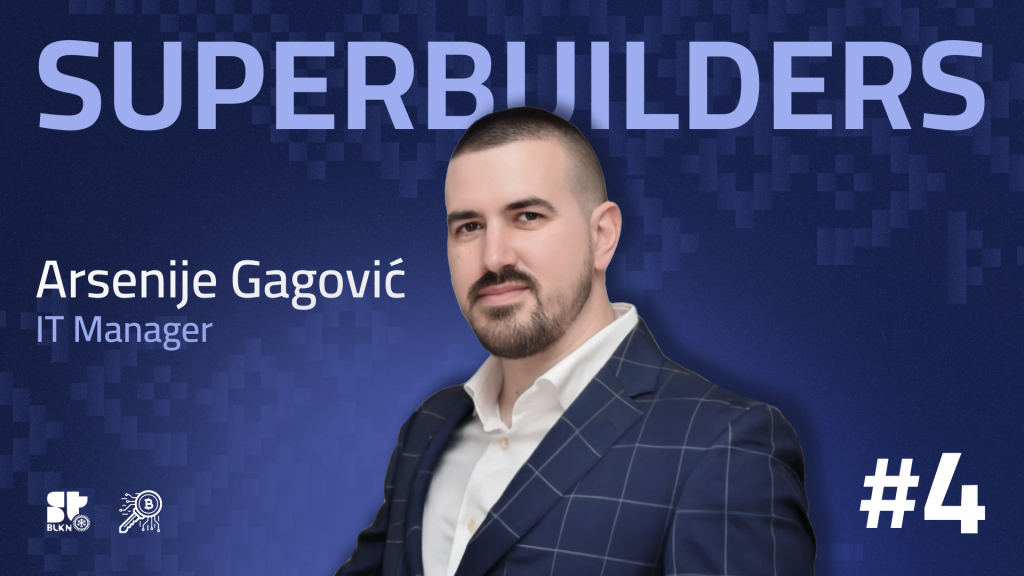
Today, we’re diving into the story of Arsenije, an IT Manager from Montenegro with a deep-rooted passion for crypto and blockchain. His journey began in 2017 with his first investment in cryptocurrencies, but what started as an interest in digital assets quickly expanded into a broader exploration of blockchain technology and its vast potential.
Now, alongside his work in IT, Arsenije is actively driving Superteam Balkan initiatives in Montenegro, helping to shape the regional blockchain ecosystem.
1. How would you describe the current state of the crypto industry in Montenegro?
The cryptocurrency sector in Montenegro is still in its early stages but is showing significant growth in terms of both user adoption and public interest in the technology. Recent events, such as conferences, educational talks, and government announcements, have sparked greater curiosity around blockchain and cryptocurrencies.
2. What unique opportunities does Montenegro offer for blockchain and cryptocurrency projects?
Montenegro stands out as a European country outside the European Union, which has attracted many international businesses to establish operations here. The country also offers an active regulatory sandbox where fintech companies, including those involved in cryptocurrencies, can test their technologies without facing immediate regulatory constraints. This creates a favorable environment for innovation while minimizing initial compliance burdens.
Additionally, as Montenegro plans to join the EU, its financial licenses are expected to have passporting rights across the EU, making it an even more attractive base for crypto businesses targeting the broader European market. The relatively low tax burden is another appealing factor for crypto businesses once the regulatory framework is finalized.
3. How would you characterize the local crypto community? Are there any standout groups or initiatives?
The Montenegrin crypto community is vibrant and eager to engage with blockchain technology. Some noteworthy initiatives include:
- Zuzalu: A temporary community project co-founded by Vitalik Buterin, focused on blockchain, AI, and longevity research. Hosted in Montenegro, it demonstrated the country’s potential as an innovation hub.
- EDCON Conference: One of the largest gatherings for the Ethereum community, held in Podgorica, highlighting both local and global enthusiasm for blockchain.
- NGO – Bitcoin Network Montenegro: This group organized Montenegro’s first-ever Bitcoin conference in Podgorica, bringing together enthusiasts and experts to discuss Bitcoin and its uses.
- SuperTeam Balkan: As an extension of the Solana Foundation, I am actively involved with this dynamic group, which focuses on introducing blockchain technology to students through meetups, lectures, and grants for Web3 projects. We aim to help students build a solid foundation in the industry.
4. What challenges do crypto enthusiasts and businesses face in Montenegro?
The primary challenge is the lack of clear regulations surrounding crypto assets. Montenegro will need to establish a well-defined regulatory framework to attract and support businesses in the crypto space.
5. How do you see the role of government regulations in shaping the future of crypto in Montenegro?
Government regulation is essential in shaping Montenegro’s crypto landscape. The government has shown a commitment to fostering a crypto-friendly environment, having discussions with international companies like Ripple regarding a national digital currency and engaging with blockchain leaders like Vitalik Buterin. However, balancing innovation with security remains a challenge, requiring regulatory frameworks that support growth while addressing risks such as money laundering.
Furthermore, the government will need to create comprehensive regulations that cover various aspects of cryptocurrency. Simply implementing a few laws will not be enough. For Montenegro to position itself as a truly crypto-friendly destination, more proactive measures are needed. With improved regulations, the country is likely to attract more businesses or encourage companies to establish their operations there.
6. Are there any notable blockchain or crypto projects that have emerged from Montenegro recently?
A notable project is Perper.net, a blockchain-based stablecoin platform. It has received approval from the Capital Market Commission under Montenegro’s financial innovation framework. Perper is designed as a digital euro, offering secure, efficient, and innovative solutions for cross-border payments. This project is a significant step in Montenegro’s efforts to position itself as a blockchain and crypto hub, with plans for deeper integration into the country’s financial ecosystem.
7. What is your vision for the growth of the crypto ecosystem in Montenegro over the next few years?
In the coming years, Montenegro could witness:
- Increased Adoption: As regulations become clearer, more businesses and individuals are likely to adopt cryptocurrencies.
- Infrastructure Development: With the regulation of digital assets, we expect to see the development of infrastructure such as exchanges, wallets, and blockchain platforms.
- Growth of Blockchain Developers: Through initiatives like SuperTeam Balkan and our student programs, we anticipate an increase in the number of blockchain developers and the introduction of blockchain-related courses in universities.
- Becoming a Regulatory Model: If Montenegro successfully addresses its regulatory challenges, it could serve as a model for other small nations seeking to integrate cryptocurrency into their economies.
8. How can Montenegro position itself as a hub for crypto innovation in the region?
Montenegro can leverage its small size and agility to attract blockchain talent and investment. By offering incentives to blockchain companies and developers, it can become a prime destination for innovation.
Additionally, creating a crypto-friendly legal environment that supports blockchain technology while ensuring strong consumer protection will be crucial. Hosting more international events, such as blockchain conferences and hackathons, will further boost Montenegro’s visibility on the global stage and attract industry leaders.
9. Solana has gained significant attention in the blockchain space—what role do you think platforms like Solana could play in Montenegro’s crypto development?
Platforms like Solana could play a key role in Montenegro’s crypto development by offering solutions for fast, low-cost transactions, which could attract both businesses and individuals in Montenegro seeking efficient blockchain applications.
Moreover, Solana could support local blockchain projects by fostering a developer community and providing grants or incentives to accelerate the growth of these initiatives, aligning with Montenegro’s goals for innovation.
